

Steps you can take

Your journey to greater water efficiency starts with four simple steps. We can set you on your way with useful advice and helpful tools. Read on to find out more.

Stepping stones across the River Ayr

Know. Check. Identify. Plan.

1: Know your usage

Look through your recent water bills to gain an idea of how much water you’re using over a certain time period.

2: Check for leaks

Make sure there aren't any leaks - even small leaks can waste a large amount of water.

3: Identify savings opportunities

Use our efficiency checklist to conduct a detailed audit of your water use and identify where you can make savings.

4: Make a plan

Decide what actions to take and commit to a deadline. Remember to review your water bills regularly to monitor progress.

Silver coins falling through water surrounded by bubbles against a blue background

1: Know your usage

It’s important to understand where you’re starting from. If you have a meter and it’s safe to read it, do so on a regular basis and keep a record. You’ll see trends in your water usage and be able to identify potential leaks. If you’re in Scotland and you don’t have a water meter, you might want to consider switching to a metered supply.

Don’t forget to review your bills, too. Compare your actual consumption against your charges (which may be based on estimated readings). And if your business has other sites similar to yours, ask to see their bills, too. How does your usage compare? Can you learn anything from different processes, approaches or equipment which might be making the difference?

We have data tools and metering options that can help.
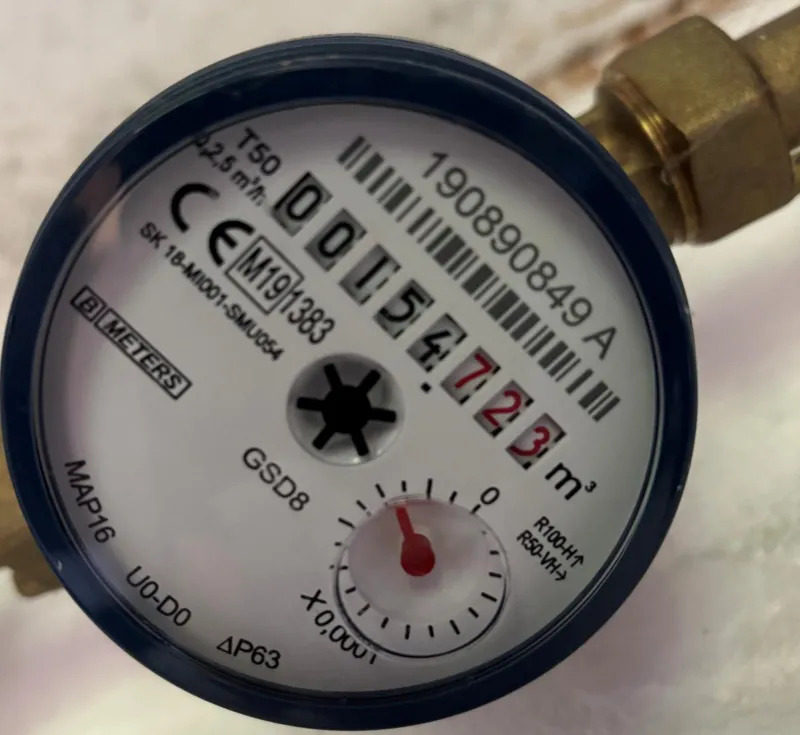
Close up of a water meter

2: Check for leaks

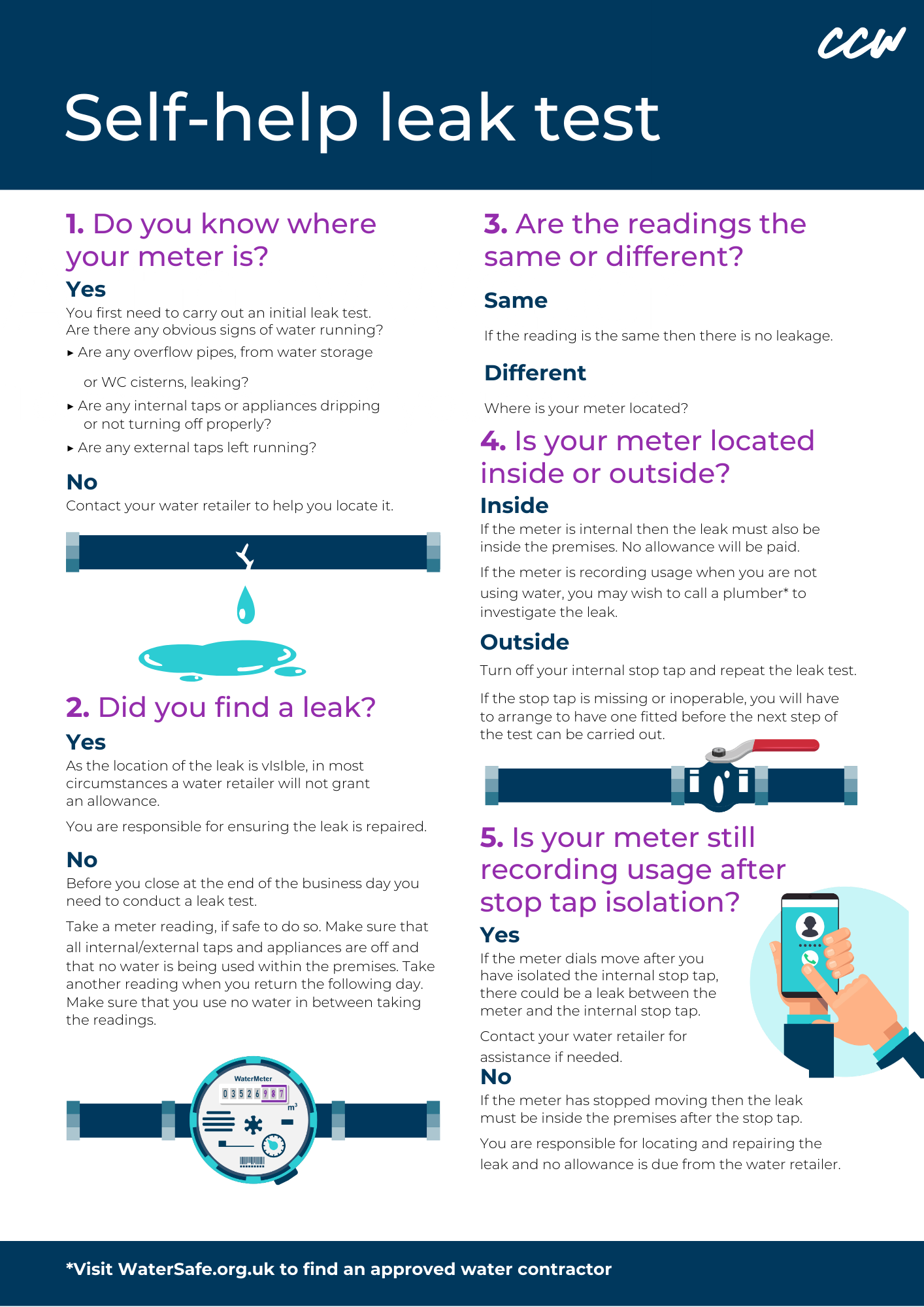
The most common cause of increased consumption. If you have a water meter, you can use it to check for leaks using our self-help leak test.

Choose a time when no water is being used. With your internal stop valve open, check your water meter. If the dial doesn't turn - great news - you don't have a leak! Be aware that it can be difficult to tell if the meter dial is turning. One way to make sure is to note your meter reading, then to leave it overnight or for a number of hours with everything switched off.

If your dial is turning or the meter reading has changed after leaving it for a few hours, it's likely that you have a leak. Call a plumber straight away to ensure that leaks are located and rectified before they can cause damage to your property.

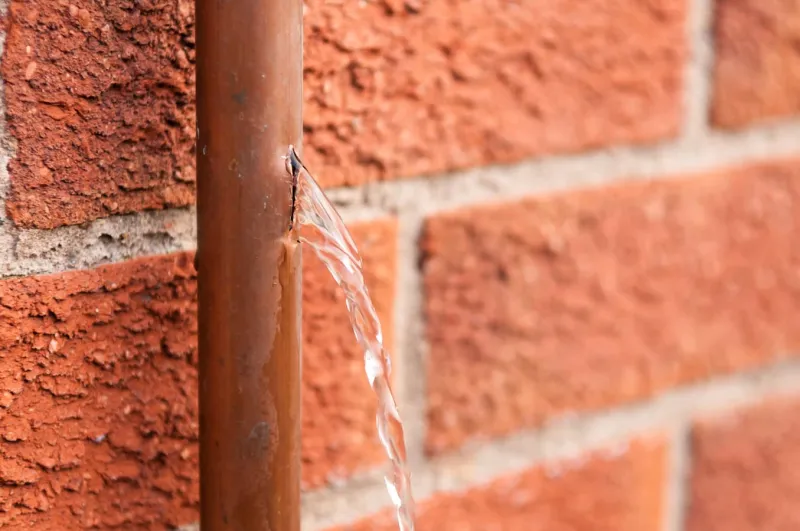
Leaking copper water pipe against a red brick wall

3: Identify savings

First, check out our top tips for business water efficiency.

Then, conduct your own efficiency audit using our handy checklist. It will guide you round your business in a structured way, pointing you to areas that are common causes of water inefficiency and waste. 

Man in hi-vis holding clipboard and pen

4: Make a plan

There are just a few stages to consider when putting your plan together.

First, digest the findings from your water audit. We hope you’ve identified a range of potential actions to help reduce your water use. Consider which options might be quick and easy to implement and which might take more time and investment. Then put a plan together for implementing them. 

Two women discussing something and gesturing to a laptop screen

Think about...

Phases

Can you do the quick wins first and add the rest to later phases? Breaking your list down into smaller chunks will help keep things manageable.

Timescales

How quickly can you start? What are achievable completion targets for each of your phases?

Responsibilities

Who will be responsible for each part of your plan? Who else will need to be involved?

Implementation

Once your plan is in place and you know who’s doing what, it’s time to make it happen.

Communication

Once your first efficiency measures are in place, be sure to tell your wider team about everything you’ve done and what else you’ve got planned. Explain what you need them to do to help make it a success.

Review

After your programme of efficiency measures has been in place for a few months, review your consumption to check how much of an impact you’ve made.

Sharing

Make sure you share the successes you’ve had around your team. Thank them for their help and inspire them to keep it up.

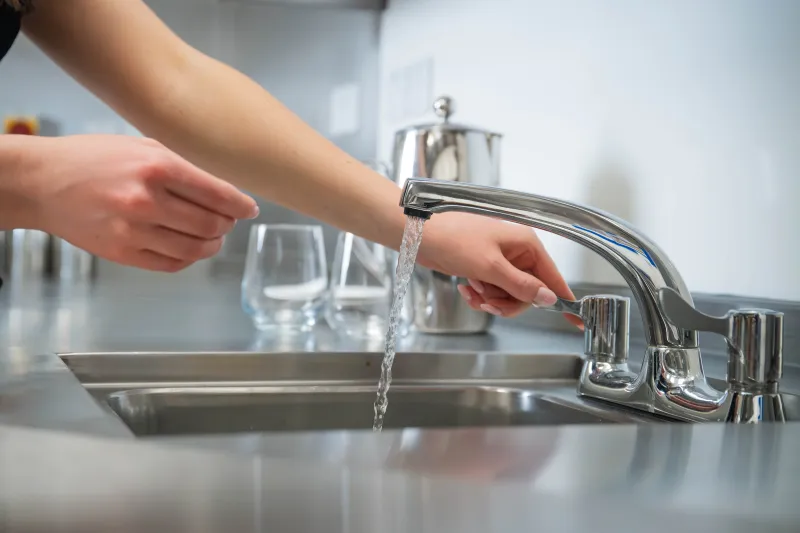
Close-up of woman's arms and hands as she operates tap at commercial sink

Use our workplace toolkit

We offer a range of useful tools to help your business save water. They will arm you with water efficiency advice tailored specifically to small and medium-sized businesses.