Business water efficiency tips

Small changes can make a big difference to your water consumption, your bills and the environment. These top tips are a great place to start.

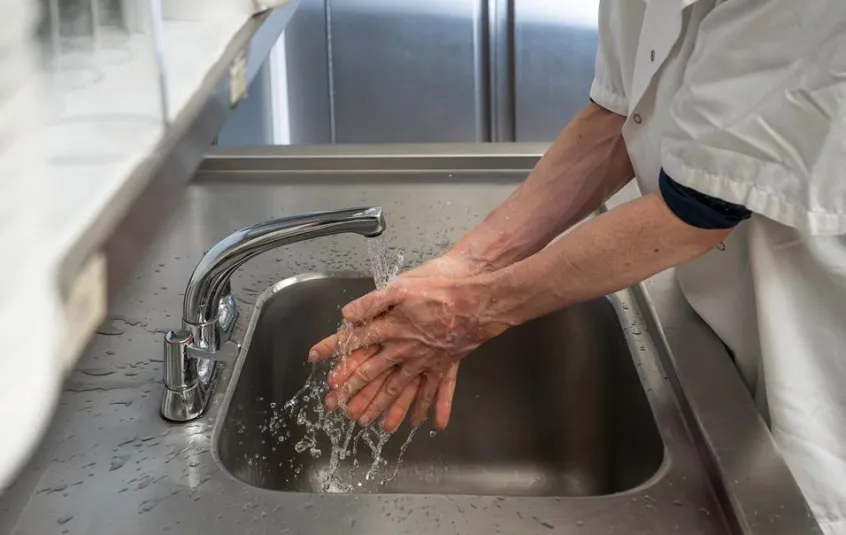
Man washing hands at commercial kitchen sink

Start saving

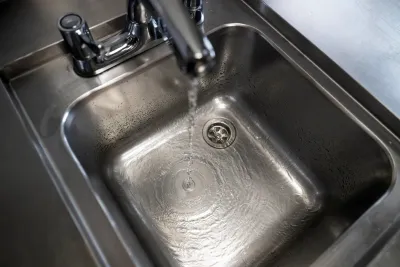
Water flowing from tap into kitchen sink viewed from above

Taps & sinks

A dripping tap can waste up to 90 litres of water per week. Replace its washer as soon as you notice a drip.

Tap aerators are a fairly low-cost way to reduce the flow from taps while maintaining their effectiveness. You can choose taps with aerators fitted or retro-fit them.

Self-closing taps prevent the risk of leaving a tap running by mistake, which can waste as much as 6 litres of water per minute.

Water basins for washing up significantly reduce the amount of water used. Make sure a basin is provided at each sink where dishes are washed.

Ill-fitting plugs waste water. Providing well-fitting plugs encourages staff to fill a sink rather than using continuously running water.

Stickers or posters can help encourage good behaviours in your staff. Try to keep them friendly, clear, positive and encouraging.
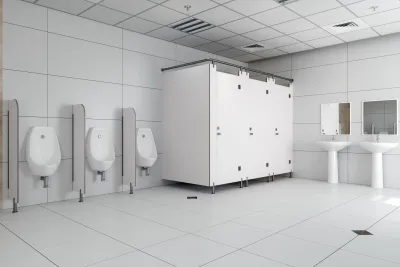
Public toilet in all white, showing cubicles and urinals

Toilet & urinals

Dual-flush mechanisms give staff the option to halve the water used in flushing the toilet when a full flush is unnecessary. This can significantly reduce the water used.

Hippos or cistern displacement devices are less costly alternatives to installing dual-flush toilets. They reduce the volume of water that the cistern can hold, meaning less water is used with each flush.

Urinal controls address a common and substantial source of waste we find when auditing businesses. Check for unwanted leaks or over-regular flushing, and ensure that the latest control mechanisms are fitted. You could also consider installing waterless urinals.

Water flowing from a shower head viewed from directly below

Showers

Leaking or dripping showers can, like taps, be a slow but steady source of waste which builds up significantly over time. Make sure to repair dripping showers as soon as you notice them.

Push-button controls ensure that showers shut off after a short period of time, minimising the chances of them being left on by accident.

Low-flow heads can be a relatively cheap way of improving shower efficiency, maintaining power and effectiveness while using significantly less water.

Shower timers can be a cost-effective solution to remind staff to keep their shower time to a minimum. Less time in the shower = less water wasted.

Stickers or posters around the shower area can help to encourage staff to be considerate with their showering.

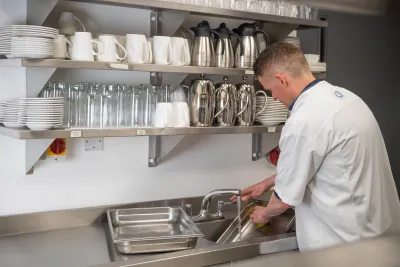
Man washing equipment in a commercial kitchen

Kitchens

Eco-boilers that heat water as you need it are a great way to save time and money. They prevent your staff from over-boiling the kettle, saving on water and energy.

Water coolers that deliver instant cold water prevent waiting for the tap to run cold for a glass of water, which can waste 10 litres of water every day.

Dish & glass washers should be the most energy- and water-efficient models you can afford. Then use the eco setting wherever possible.

Dripping taps are as wasteful in kitchens as they are in toilets and bathrooms. Replacing the washer is a simple fix.

Tap aerators reduce flow while maintaining effectiveness.

Close-up of copper pipework on grey background

General plumbing

High water pressure can cause pinhole leaks in your system, which can lead to major leaks and wider issues including serious property damage. Try to ensure your water pressure is at the lowest level it can be for your needs.

Visible pipework around your premises should be checked carefully and regularly for signs of leakage.

Close up of lawn from ground level with trees out of focus in background

Grounds & gardens

When considering business landscaping, choose as many existing trees and shrubs as possible. Established plants usually require less water and maintenance. Try to choose plants native to the UK too. Once established, they’ll require very little to no water beyond normal rainfall.

Increase drainage
It might seem counter-intuitive, but consider working sand through your soil, to keep it porous and allow water to drain more effectively. This will encourage plants to root deeper into the ground, making them more resilient to drought.

Watering & lawn care
Avoid lawns if you can. It’s lovely to enjoy lunch outside on a warm day, but maintaining lawns can be water-intensive and expensive. Do you need to lay turf or are there alternatives? If you do have lawns, water them wisely. It’s better to water them heavily once a week, rather than lightly every day. This encourages the grass to root further down, delivering increased flood and drought-resistance. Water your lawns first thing in the morning for maximum impact.

Try not to use sprinklers 
They consume up to 1,000 litres of water per hour - more than a family of four use in a day. They’re best avoided, but if you can’t, try to make sure you’re not over-sprinkling. Catch water in a measuring jug to calculate sprinkler output. 3/4 to 1 inch of water is enough to apply each time you irrigate.

Go the extra mile!
Consider letting those lawns go brown in the summer. And remember, if you look after them during the winter, they’ll survive the tougher times too.

Water recycling & reuse

Rainwater from roofs or large paved areas (e.g. car parks) can be recycled and used for toilet flushing, vehicle washing or watering plants.

Waste water from washroom basins and showers (known as greywater) can be recycled and used for flushing toilets or watering grounds and gardens.

For many businesses, water recycling offers substantial potential to reduce consumption. We offer expert advice on cost-effective solutions.

Close-up of water flowing downwards over a rock

Your processes

We’ve covered some of the main areas, but are there others that we’ve missed that are specific to your business?

Identify any non-essential uses of water. Consider also the frequency of these processes. Is it essential that you do them as often as you do?

Consider the efficiency of your processes. When was the last time you researched the latest water efficiency tactics and techniques in your industry? Industry press and online communities are a great source of specialist knowledge. Do some research into the latest equipment and practices and see how you compare.

Can we help? We have a wealth of experience in helping businesses of all shapes and sizes. Our experts are on hand to help solve even the most complex industrial issues. 

Young man washing car with pressure washer

Your team can help

They are a valuable source of information on how things really run in your business. Raise awareness with them on what you’re trying to achieve and what you’ve already discovered. You may find that they can provide vital real-world insights leading to water efficiency measures you hadn’t previously considered.

Getting buy-in from your team is crucial to the continued success of any water efficiency programme. As your plans progress and new measures are implemented, keep your team informed. Share your successes with them and inspire them to help and contribute.

Team of workers walking towards the camera in a factory setting
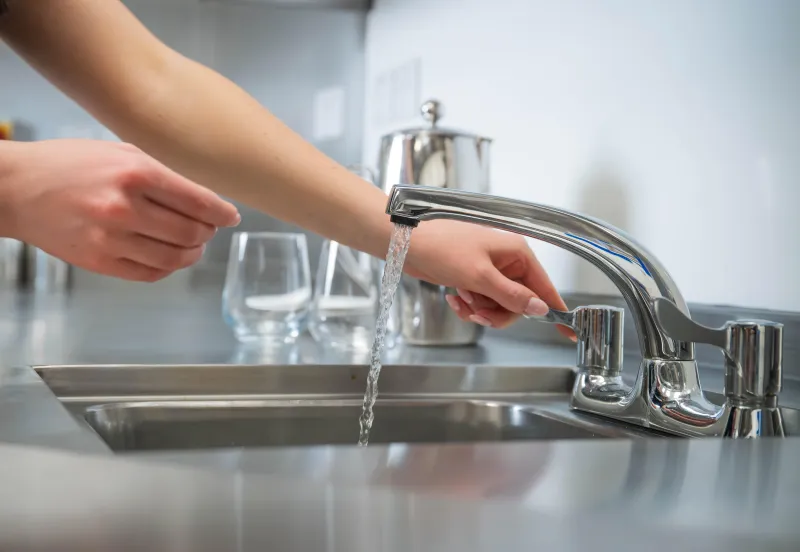
Close-up of woman's arms and hands as she operates tap at commercial sink

Use our workplace toolkit

We offer a range of useful tools to help your business save water. They will arm you with water efficiency advice tailored specifically to small and medium-sized businesses.